
Lenovo in Brief - AI, Foldables and BIOS Acquisition
Lenovo is not slowing down - in recent weeks the company has surprised us with bold hardware concepts, strategic acquisitions and expanded partnerships in artificial intelligence. From a foldable gaming handheld, through the acquisition of a key BIOS firmware business, to major AI initiatives with NVIDIA - here is everything worth knowing about Lenovo in one place.
Legion Go Fold: a foldable handheld that shouldn't work - and yet it intrigues
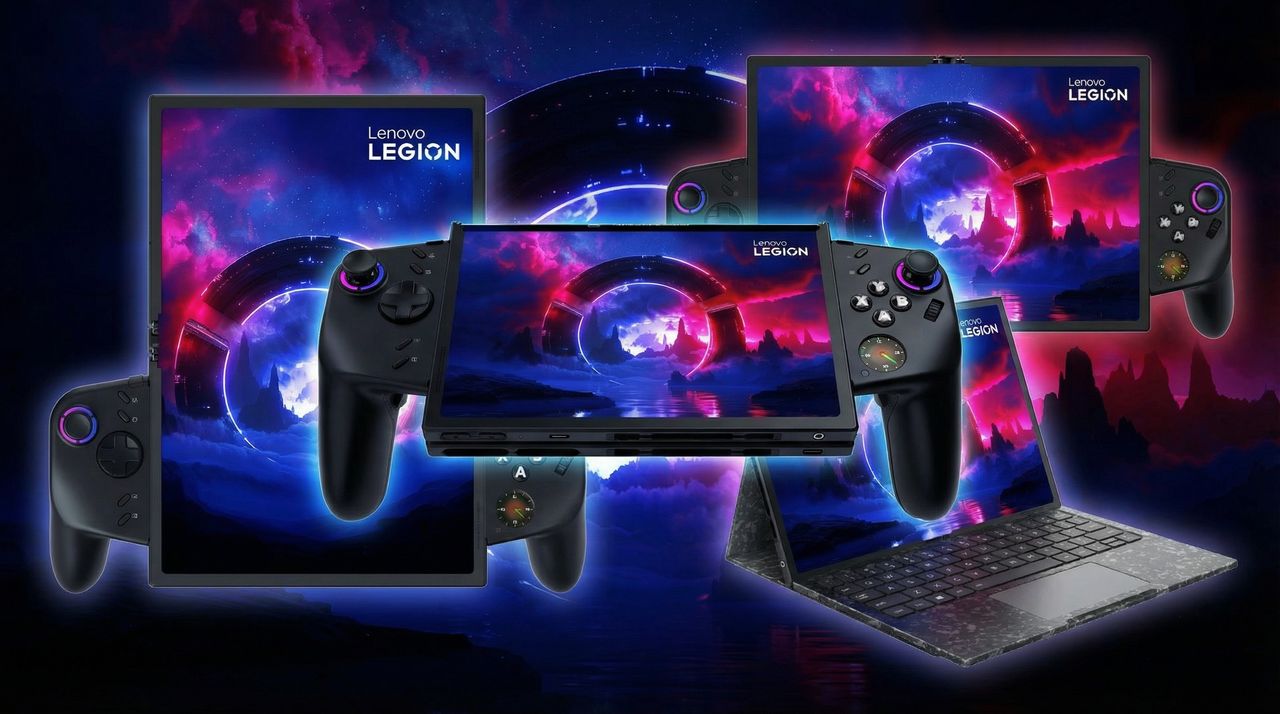
At MWC 2026, Lenovo presented one of the most ambiguous hardware concepts of recent years - the Legion Go Fold. This device tries to be a portable gaming console in the style of the Legion Go, a tablet modelled on the Surface Pro and a next-generation foldable gadget all at once.
At first glance the project seems over-engineered - the handheld market is already crowded, and foldable screens still raise concerns about durability. Even so, Lenovo clearly believes in the potential of this format, trying to find a niche between existing product categories and offer users a device on which they can both play and work on the go.
The project is not a finished product but a concept - a demonstration of engineering ambition. A foldable screen in the mobile gaming segment is still terra incognita, and Lenovo is openly exploring this space. Will the concept ever reach mass production? That question remains open, but the sheer boldness of the designers deserves attention.
Source: Windows Central
Live blunder: a laptop with a rollable screen refused to cooperate on Jimmy Fallon's show
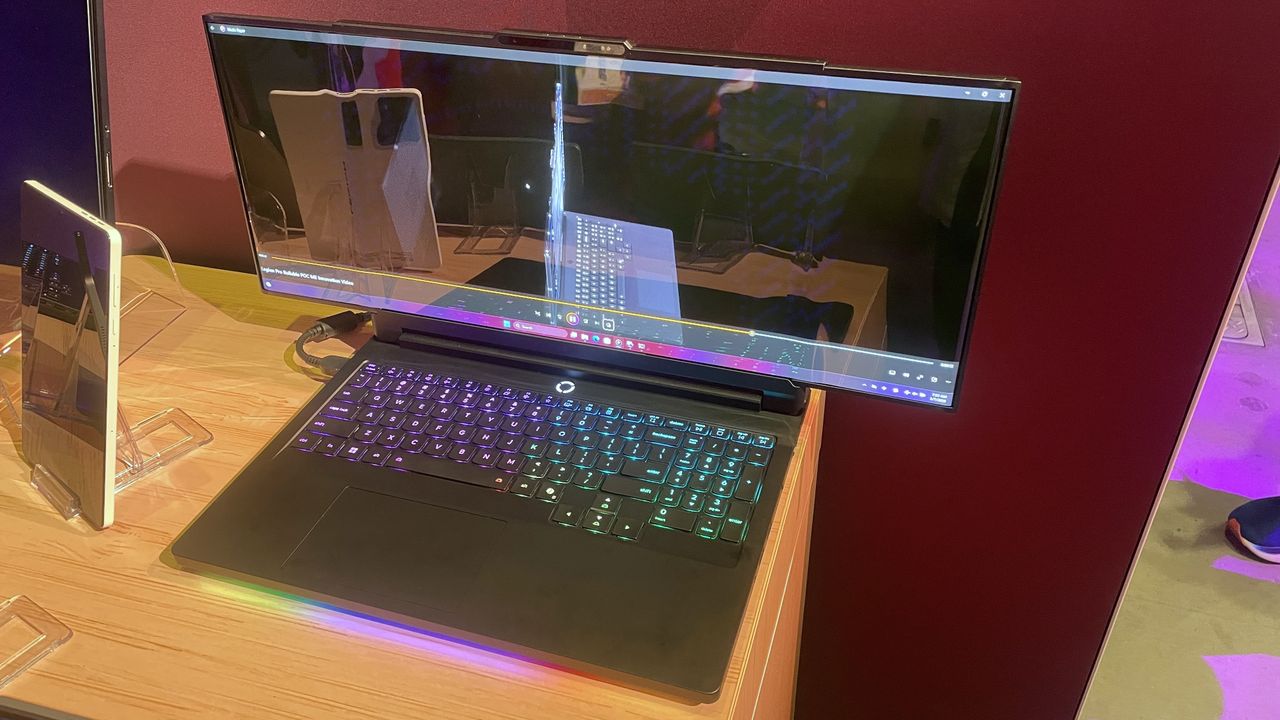
Earlier this year Lenovo learned a painful lesson about public demonstrations of new technologies. A laptop with a rollable screen, enthusiastically received at CES, simply did not work during an appearance on The Tonight Show with Jimmy Fallon - and in front of millions of viewers.
The incident painfully reminded everyone that prototype technologies follow their own rules. The move from the controlled environment of an industry conference to a television studio turned out to be too big a leap. The hype from CES turned into a media blunder that technology market observers will remember for a long time.
On the other hand, even this embarrassing situation drew the attention of a wide audience to Lenovo's innovative work on new form factors. The event also became an important memento for the whole industry: even the most exciting technologies require solid testing before they are taken live in front of the cameras.
Source: Windows Central
Legion Go: good and bad news in one week
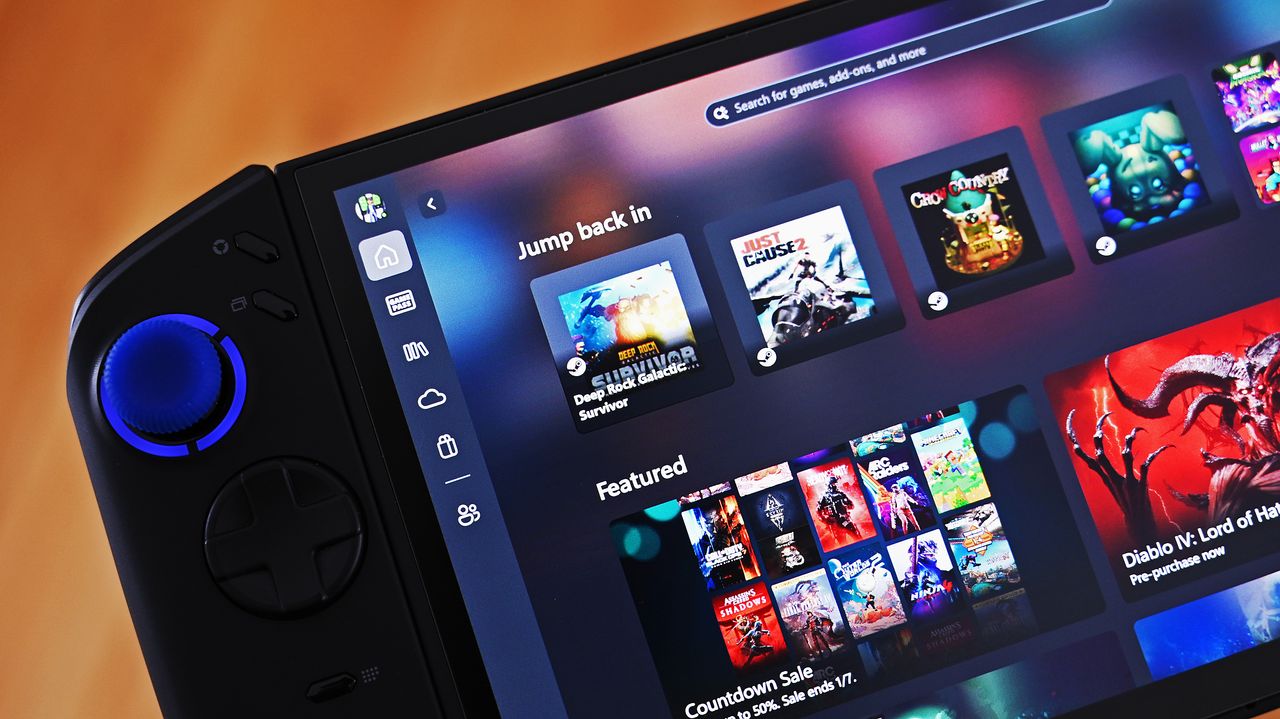
Users of the Legion Go have recently received two very different pieces of news. The good one: Lenovo has updated the software of its handhelds to better support the Xbox Full Screen Experience - the Xbox full-screen interface that until now was the domain of the Asus ROG Ally. Thanks to this update, gamers who prefer the Microsoft ecosystem can now enjoy a smoother, more console-like experience on their Lenovo device.
The bad one: Lenovo has officially confirmed that the first generation of the Legion Go, based on the AMD Ryzen Z1 Extreme processor, will no longer receive new drivers. Support for this model is being discontinued, which means no future security patches or performance optimisations. For owners of the first Legion Go it is a signal that their device is entering the final phase of its life cycle.
Together, these two pieces of information paint an interesting picture of Lenovo's strategy: the company is actively investing in new generations of gaming products while at the same time ending its commitments to older models. For the handheld market this is an important signal - when buying a gaming device, it is worth paying attention to the manufacturer's long-term plans for software updates.
Source: Windows Central, Windows Central
Strategic acquisitions and appointments: Lenovo strengthens its position

April 2026 brought two significant pieces of corporate news. The first - Lenovo has completed the acquisition of the firmware business of Phoenix Technologies, registered in Dublin. As part of the transaction, Lenovo took over all intellectual property and know-how related to BIOS technology.
This is a move of great strategic importance. The BIOS is the foundation of every computer - it is responsible for initialising the hardware and for communication between the operating system and the device's components. Owning its own BIOS technology gives Lenovo much greater control over the behaviour of its products, the ability to integrate security features more deeply, and independence from external suppliers in this key area. Users of ThinkPad and other series can expect this investment to translate in the future into better, more tailored firmware.
The second appointment concerns the Middle East market: Lenovo has named Salman Faqeeh as head of the Lenovo organisation in Saudi Arabia. Saudi Arabia is for Lenovo not only an important sales market but also a regional technology hub - this personnel decision signals serious expansion ambitions in the MENA region.
Source: Lenovo StoryHub, Lenovo StoryHub
Lenovo and NVIDIA: enterprise-scale AI - from sports to gigawatt factories

The NVIDIA GTC conference was an opportunity for Lenovo to present a whole ecosystem of AI solutions for businesses. The flagship announcement was Lenovo Hybrid AI Advantage‚Ñ¢ - a platform combining AI inference capabilities with gigawatt-scale infrastructure. The solution is designed to shorten the time to first token (TTFT) and deliver measurable business results in personal, enterprise and cloud environments.
One of the most surprising applications of this cooperation is sport. Lenovo and NVIDIA have announced a multi-year initiative to deploy production-scale AI in the global sports industry, covering three areas: Sports Intelligence (analytics and result prediction), Operations (management automation) and Media & Content (personalisation of content for fans). For clubs and sports organisations this is a chance for new revenue streams and deeper fan engagement.
Another example of the scale of Lenovo's ambitions is the partnership with the Canadian cloud provider IREN. The company supplies hardware to facilities in Prince George, British Columbia, supporting sustainable next-generation AI services. The energy efficiency and reliability of Lenovo devices were key factors in choosing the supplier - which shows that sustainability is becoming as important a selling point as raw performance.
Lenovo has also published a report warning that as many as 70% of AI deployments in corporate environments remain uncontrolled. This creates hidden risk and unnecessary costs, and slows down the return on investment. The company's answer is Hybrid AI solutions, which are meant to ensure governance at scale - managing AI across the whole enterprise with full transparency and control.
Source: Lenovo StoryHub, Lenovo StoryHub, Lenovo StoryHub, Lenovo StoryHub
AI beyond the office: smart cities, vehicles and edge computing

Lenovo is increasingly moving beyond the traditional laptop and computer market, entering areas that a few years ago seemed to be the domain of completely different players. One example is the Auto AI Box - a dedicated computing platform for in-vehicle use, designed to handle advanced real-time AI workloads. Car manufacturers and mobility solution providers can integrate advanced AI functions without building the whole infrastructure from scratch.
Equally interesting is the project carried out with the town of Cary in the USA - one of the most ambitious smart city initiatives at local government level in the United States. Lenovo is helping to build a digital twin of the city - an AI platform that models and analyses city resources in real time, supporting better management and resident engagement. It is proof that Lenovo's enterprise solutions are already reaching the public sector.
In turn, the new generation of ThinkEdge devices brings scalable AI edge computing solutions - from small edge gateways to high-performance industrial systems. Devices in ruggedised enclosures are suited to work in harsh conditions and offer real-time analytics that enable organisations to make faster decisions based on data collected where it is generated.
Source: Lenovo StoryHub, Lenovo StoryHub, Lenovo Press
ThinkPad is getting greener - partnership with Makersite

Lenovo is taking concrete steps towards environmental transparency of its products. In cooperation with Makersite, it is introducing a new life cycle assessment (LCA) standard for laptops from the ThinkPad series. The key is the integration of granular data directly from component suppliers, which allows the carbon footprint to be monitored continuously at every stage of production.
Automating LCA processes shortens the time needed for analyses and increases their reliability, eliminating manual errors and inconsistencies. Standardising the methodology across the whole corporation makes emissions data comparable between different product lines and regions - which is crucial for credible ESG reporting.
For business customers, who increasingly have to report the carbon footprint of their IT equipment as part of their own sustainability commitments, this means access to more precise data from the manufacturer. It is a step that sets Lenovo apart from competitors offering only general environmental declarations.
Source: Lenovo StoryHub
Lenovo is going through an extremely intensive period - from bold experiments with foldable screens, through strategic acquisitions of BIOS technology, to building a comprehensive AI ecosystem for businesses in cooperation with NVIDIA. It is a company that looks to the future while also strengthening the foundations of its technological position. If you already own a Lenovo laptop and are looking for original spare parts - housings, covers, bezels, keyboards, touchpads, fans, cables and other parts - visit www.abcdeal.pl. In our shop you will find original components for models from the ThinkPad, IdeaPad, Legion and ThinkBook series, thanks to which your device will serve you for many more years.
Sources:
- Lenovo's new folding gaming handheld concept is so weird it shouldn't work - Windows Central
- Lenovo's rollable laptop demo failed live on The Tonight Show with Jimmy Fallon - Windows Central
- Lenovo just updated its Legion Go handhelds to better support the Xbox Full Screen Experience - Windows Central
- Lenovo Appoints Salman Faqeeh to lead Saudi Arabia Organization - Lenovo StoryHub
- Lenovo Completes Acquisition of Phoenix Technologies' Firmware Business - Lenovo StoryHub
- 70% of Enterprise AI is Uncontrolled, Driving Hidden Risk, Cost and Slower ROI - Lenovo StoryHub
- How Lenovo Is Transforming Enterprise Sustainability for ThinkPad Through its Partnership with Makersite - Lenovo StoryHub
- AMD Ryzen Z1 Extreme driver support discontinued? - Lenovo confirms no further Legion Go plans - Windows Central
- Lenovo Unlocks Data Potential with Next Generation of AI-Driven ThinkEdge Solutions - Lenovo Press
- Driving Smarter: How Lenovo Is Bringing Intelligence into Everyday Journeys - Lenovo StoryHub
- Powering More Sustainable AI at Scale: How Lenovo Supports IREN's Next-Gen AI Cloud Services - Lenovo StoryHub
- Lenovo and NVIDIA Bring Production-Scale AI to Global Sports - Lenovo StoryHub
- The Future of Local Government: How the Town of Cary is Investing in a More Engaged Municipality - Lenovo StoryHub
- The Agentic AI Era: Why Lenovo Hybrid AI with NVIDIA will define enterprise leadership - Lenovo StoryHub
- Lenovo Accelerates Production-Ready Enterprise AI with NVIDIA - Lenovo StoryHub
Parts for your Lenovo laptop - touchpad, keyboard
Message from: 16-05-2026